For most feature walls, a veneered-MDF acoustic slat panel in oak, around 24 in × 94.5 in on a felt backing, is the sweet spot. It is stable, good-looking, softens echo, and goes up with adhesive and a few screws. Spend up for solid wood, wider slats, or walnut only when you want the upgrade and the room's humidity is steady. Not sure how many you need? Run the panel calculator first.
Why slat walls took over
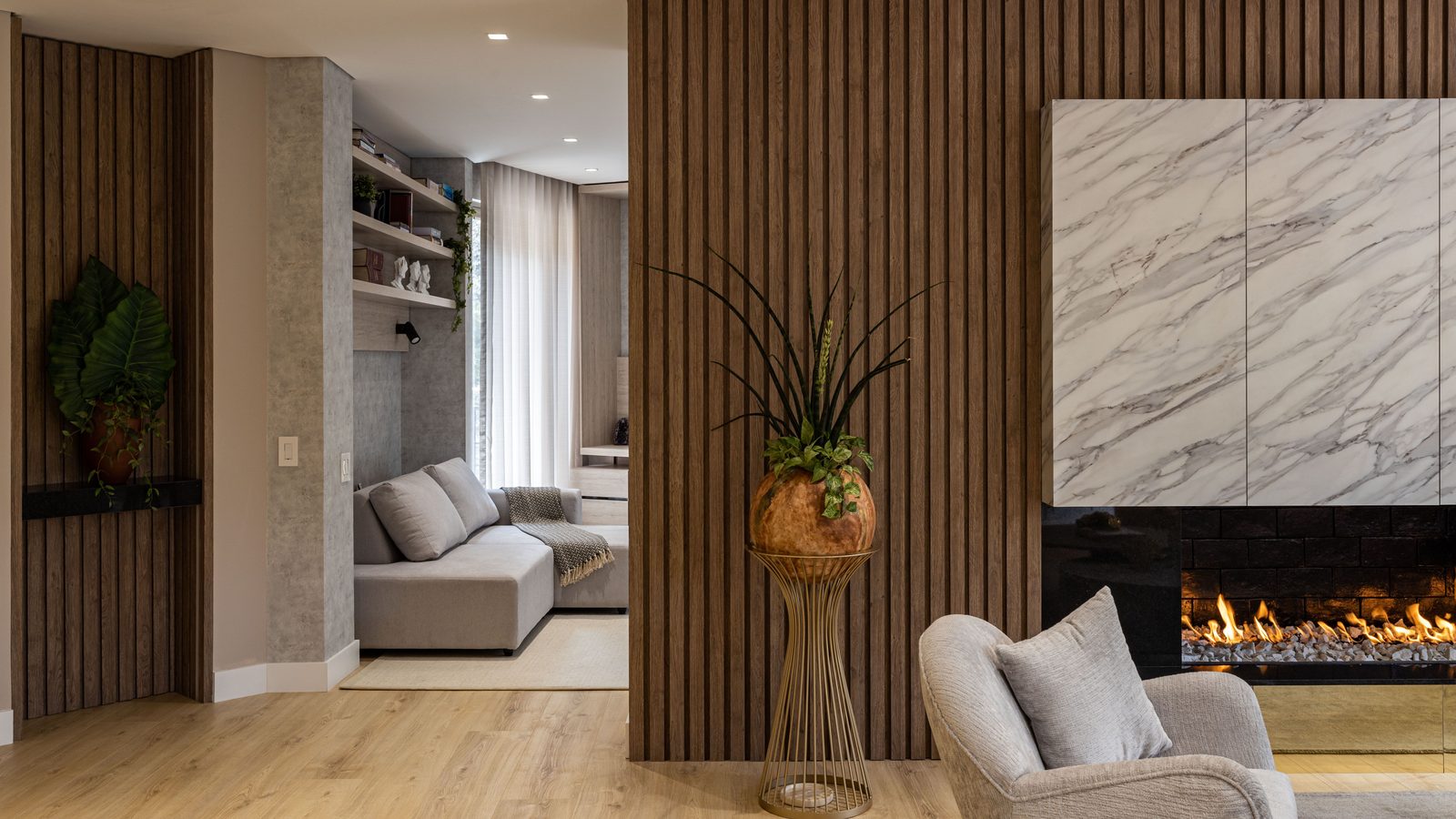
Acoustic slat panels do two jobs at once. They add warm, architectural texture to a flat wall, and the felt behind the slats softens the room's echo. That combination, on a panel a competent DIYer can hang in an afternoon, is why the slat wall became the defining wall treatment of the moment. Before you buy, three things decide whether yours looks premium or cheap: the core, the wood, and the felt.
1. The core: MDF vs plywood vs solid wood
The core is the body of the panel that the slats are cut from or mounted to. It drives cost, weight, and how the panel handles humidity.
- Veneered MDF. An MDF core with a thin layer of real wood on top. Stable, consistent, and the most affordable. This is what most panels are, and for a normal interior wall it is the right call.
- Plywood core. A step up in moisture resistance and screw-holding. Worth it in rooms with more humidity swing.
- Solid wood. Slats milled from solid oak, walnut, or ash. The richest look and the best aging, but the priciest, the heaviest, and the most likely to move if the room's humidity is not stable.
2. The wood: species and finish

The veneer species sets the whole mood of the wall.
- Oak. The default. Light, warm, and forgiving with almost any palette. Natural and white-oak tones are the safe, popular pick.
- Walnut. Darker and richer, a more dramatic and upscale feel. Costs more.
- Ash and light species. Bright and Scandinavian.
- Smoked or black-stained. Bold and modern, great behind a TV or as a headboard wall.
Whatever the species, look for a matte or satin finish over high gloss. Gloss shows dust and reads cheaper. And confirm the finish is a real wood veneer, not a printed foil wrap, which is the biggest tell between a panel that looks like wood and one that only looks like wood in the listing photo.
3. The felt backing and acoustics
The felt panel behind the slats is what makes these "acoustic." It absorbs some sound and cuts the echo in a room, which is why a slat wall makes a space feel calmer, not just look better. Two honest points to set expectations:
- This is a decorative acoustic treatment. It reduces reverberation inside a room, it does not soundproof a wall between rooms.
- Felt color matters visually. Black felt gives the deepest shadow line between slats and is the most common. Grey or matching felt reads softer.
If sound is a real priority, look for the panel's absorption rating and treat it as a bonus on top of the looks, rather than a substitute for proper acoustic panels.
Panel sizes, and what they mean for your wall
The common panel is roughly 24 inches wide by 94.5 inches tall (600 by 2400 mm). That height is a touch under a standard 8-foot wall, so most feature walls are a single row with a small trim at the top. Taller ceilings need a second row and a planned horizontal seam. Half-height 24 by 48 inch panels exist for wainscot looks. Slat width and the gap between slats also vary, and wider slats read more contemporary.
Where to use them
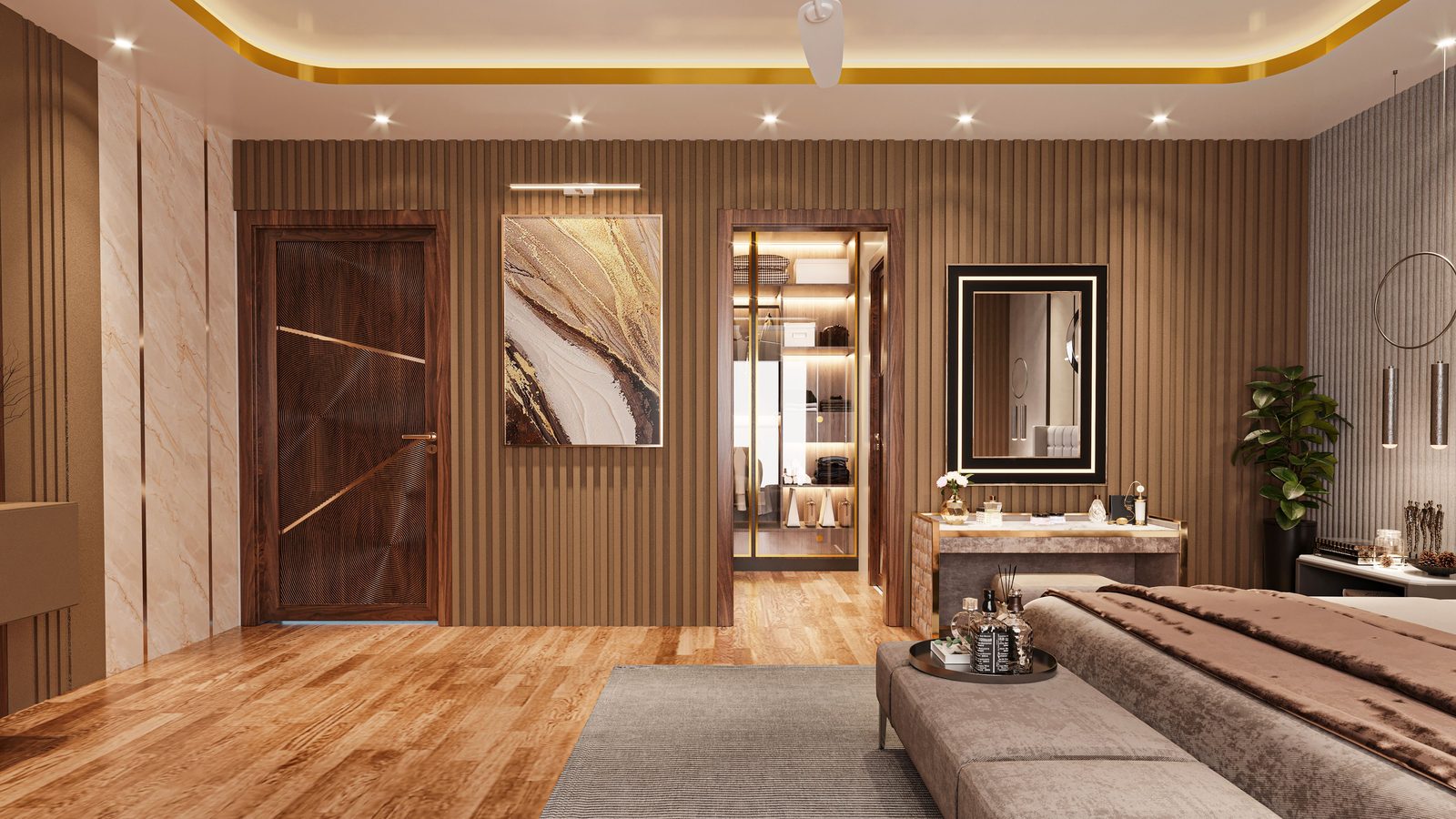
Slat walls earn their keep as a single feature: behind a bed as a headboard wall, behind a mounted TV, along a hallway or stairwell, or as a fireplace surround. They also work on ceilings for drama. What they are not is an every-wall treatment, since the whole point is one focal surface that the rest of the room plays off.
What you will pay
Most acoustic slat panels run roughly $30 to $90 each. A typical feature wall of 8 to 20 panels lands around $300 to $1,500 in materials, before adhesive, screws, and trim. Solid wood, walnut, and wider slats sit at the top of that range; veneered MDF in oak sits at the bottom. The other cost to plan for is finishing: edge trim or molding to cap the exposed sides and top, plus construction adhesive and screws.
How to choose, in one minute
- Normal living room, want value and a safe look: veneered MDF, natural oak, black felt, standard 24 × 94.5 in.
- Want it to feel high-end: step to walnut or a wider slat.
- Humid room or hard use: plywood core, and skip solid wood.
- Wainscot height or a half wall: half-height panels.
Which tier is right for you
Slat panels sort into four tiers. Match the tier to your room, your budget, and how much you care about solid wood versus a convincing veneer.
Veneered oak, standard size
The do-it-all pick: real oak veneer on MDF, 24 × 94.5 in, black felt. Best balance of look, price, and availability.
Size your wall →Budget MDF veneer
Lowest cost per panel for a big wall on a tight budget. Check the veneer is real wood, not foil.
Size your wall →Solid or walnut
Walnut veneer or solid wood for a genuinely high-end feature wall. Best in a humidity-stable room.
Size your wall →Half-height panels
Wainscot-height coverage with fewer panels and lighter install, easier to finish and reverse.
Size your wall →Sources, checked 28 August 2026
- Everbilt wood slat acoustic panels, Home Depot ($114.79 per 2-panel case, 31 sq ft, August 2026)
- ComfortHomi 94.5 × 24 in slat panels, Wayfair
- 48 × 24 in half panels, Home Depot
- Art3d narrow slat panels, Home Depot ($149.99 per 4-panel case, 21 sq ft, August 2026)
- SlatPanel, narrow panel dimensions
- Our own quantity method, published in full at how we calculate
Links are evidence for the figures on this page, not recommendations. None of them earn us anything, as set out in how we make money. Found something out of date? hello@rollandbloom.com.