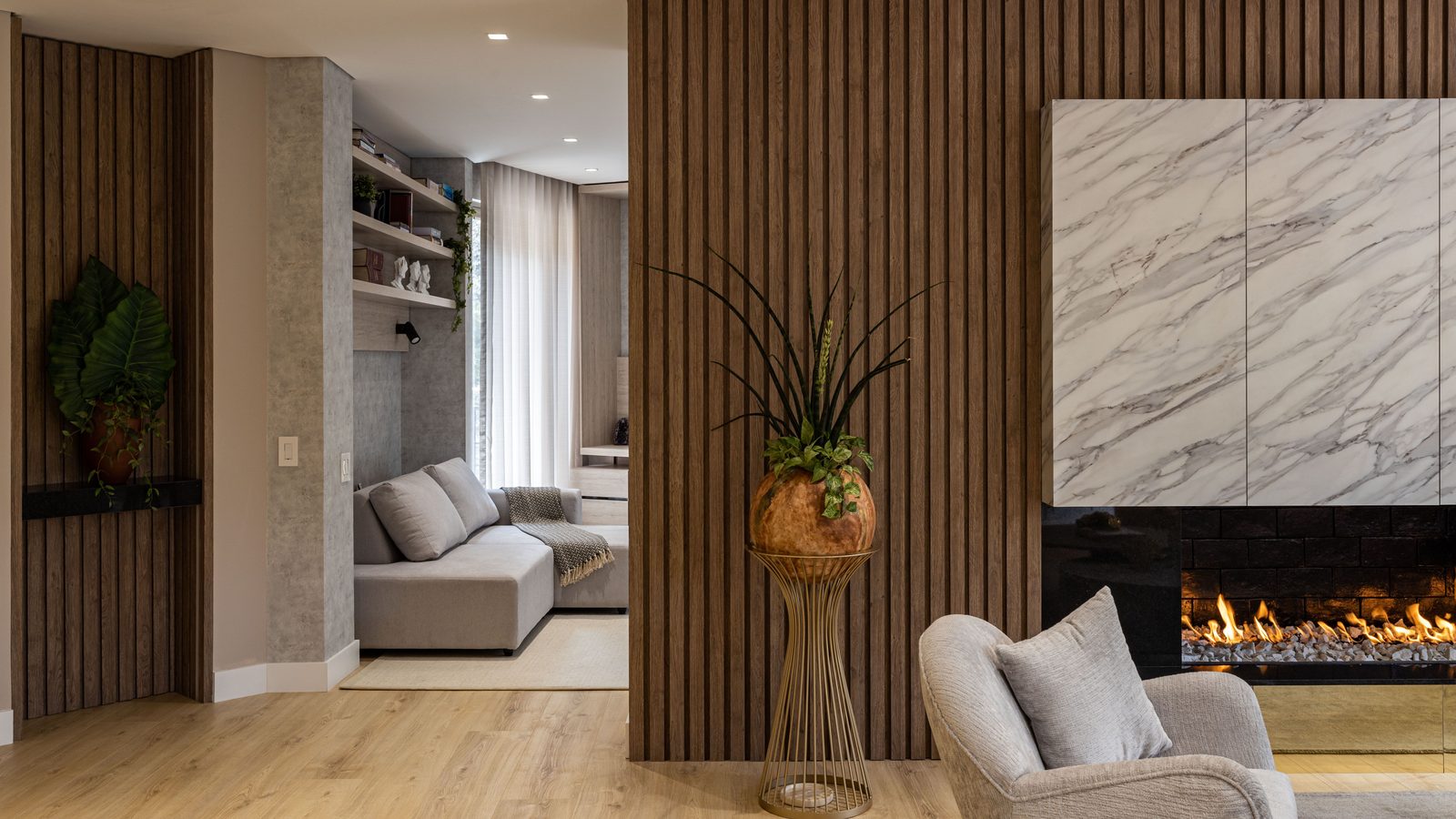
Wood slat walls are vertical slats with gaps, usually on acoustic felt, giving a warm, modern, three-dimensional look that also absorbs sound. Shiplap is flat horizontal boards with a neat groove between them, for a classic farmhouse or coastal feel and a flush surface. Choose slats for a contemporary, acoustic feature wall; choose shiplap for a traditional, budget-friendly, paint-ready look. Sizing a slat wall? Run the calculator.
The quick comparison
| Factor | Winner |
|---|---|
| Modern, dimensional look | Wood slat |
| Classic farmhouse / coastal look | Shiplap |
| Sound absorption (acoustics) | Wood slat |
| Lower material cost | Shiplap (usually) |
| Speed of install | Wood slat panels |
| Paintable / change color | Shiplap |
| Hides an uneven wall | Wood slat |
| Flush surface (art, shelves) | Shiplap |
The look
This is the heart of the decision. Slat walls are vertical, spaced, and dimensional; the gaps and shadows read distinctly modern and Scandinavian, and the warm wood tone gives a room instant depth. Shiplap is horizontal, flat, and understated; it leans farmhouse, coastal, and traditional, and it's almost always painted (classic white) rather than left as bare wood. If your room is contemporary, slats fit. If it's cottage, craftsman, or coastal, shiplap fits.
Acoustics
Here the two aren't close. Felt-backed acoustic slat panels are a real sound treatment, and they noticeably soften echo in a room, which is why they've become popular in offices, media rooms, and open-plan spaces. Shiplap is a solid, hard surface with no absorption; it behaves like any other wall acoustically. If quieting a room is part of the goal, slats are the only one of the two that does it.
Cost and installation

Shiplap is often the cheaper material, especially with budget boards or plywood strips, though a premium solid-wood shiplap can meet or beat slat pricing. On install, pre-made slat panels tend to go up faster because each panel covers a large area with the slats already spaced; shiplap means cutting and leveling many boards while keeping every gap even. Both mount to studs or a backing, and both benefit from a level, a stud finder, and patience. For real numbers, see the slat cost guide.
Which should you choose?
Modern & acoustic
You want a contemporary, dimensional feature wall, warm wood tone, and genuine sound absorption. Fast to install from panels.
Size your wall →Classic & paintable
You want a farmhouse or coastal look, a flush paintable surface, and potentially a lower material cost.
Read the slat guide →The room's style first
Let the room decide: contemporary leans slat, traditional leans shiplap. Both are strong; neither is wrong.
Plan the panels →Sources, checked 28 August 2026
- Everbilt wood slat acoustic panels, Home Depot ($114.79 per 2-panel case, 31 sq ft, August 2026)
- ComfortHomi 94.5 × 24 in slat panels, Wayfair
- 48 × 24 in half panels, Home Depot
- Art3d narrow slat panels, Home Depot ($149.99 per 4-panel case, 21 sq ft, August 2026)
- SlatPanel, narrow panel dimensions
- Our own quantity method, published in full at how we calculate
Links are evidence for the figures on this page, not recommendations. None of them earn us anything, as set out in how we make money. Found something out of date? hello@rollandbloom.com.